AQD’s new shuttle bus, service boat

AQD's new shuttle bus New shuttle bus
There will soon be no more crowding on the bus for AQD’s Tigbauan Main Station (TMS) employees since the aging shuttle service bus will finally be replaced. A new 61-seater, 4-stroke, 6-cylinder Hino 2009 model bus powered by a turbo diesel engine and complete with tools and a spare tire was acquired from Motormall NCR at the cost of P5,109,375.

The bus, accompanied by Engr. ZT Suriaga and AQD driver ‘Monet’ Parreño, arrived in TMS last June 23 from Canlubang, Laguna after a brief stop-over at the Manila Office. Two representatives from Pilipinas Hino also came over to conduct a seminar/orientation on the maintenance and operation of the bus.

Parts were made in Japan and assembled in Laguna. The wavy design adorning the bus is by Mr. IT Tendencia. It will start shuttle services next month.

Of AQD’s two old 45-seater buses, one will be sold to pay for the repair of the other.

New service boat
AQD's new service boat stationed at the Igang Marine StationAQD’s Igang Marine Station (IMS) has a new multi-purpose flatboat to ferry visitors, cargo, and fingerlings.

The body of the boat was completed in May of this year and the tarpaulin roofing was finally installed this June.

At 40 feet long and 8 feet wide, the boat can safely transport 50 to 60 people according to Mr. AG Gaitan, IMS head and designer of the boat.

With its integrated flow-through water system, the boat can transport fingerlings from TMS to IMS with less handling and reduced transport-related mortality.

Water can be pumped in from the boat’s hull to fill the boat’s interior while a stand pipe maintains the water level. An exit sluice gate at the side of the boat can then release the fingerlings directly to the fish cages.

The body of the flatboat was constructed at an approximate cost of P 150,000 while its reconditioned Isuzu 4DR5 engine was taken from AQD’s Dumangas Brackishwater Station (DBS).

Phase 2 of mud crab project in Northern Samar

DSC03340 AQD and its partners Action for Community Empowerment (ACE) Association Inc. and Bureau of Fisheries and Aquatic Resources (BFAR) made plans for the phase 2 of the Institutional capacity development for sustainable aquaculture (ICDSA) project in Northern Samar entitled Mariculture enterprise development project. The meeting was conducted May 27-29 in Catarman, Northern Samar.

The partners also assessed the progress of the nursery and grow-out (see photo on AQD's homepage) of the first phase - Enhancing adoption of mud crab production technologies (nursery, grow-out, and fattening). The target survival rate of 40% at the nursery was met at the three sites. Lao-ang, Pambujan, and Rosario had 46%, 70.18%, and 54% survival rate respectively.

Phase 1 activities for the remaining months of this year and preparation of an illustrated manual were also discussed during the meeting.

DSC03137 Other than the project meeting, AQD scientists Dr. Mae Catacutan and Dr. Emilia Quinitio conducted a training entitled AquaFeed: feed formulation and preparation at Pambujan as requested by its local government and pond operators. The training is part of a season-long training course.

The project is funded by the Australian Centre for International Agriculture Research (ACIAR) and the Community Agricultural Technologies Project (CATP).

Lastly, AQD specialist Ms. Didi Baticados also joined the group to gather data about her Government of Japan-Trust Fund study on the socioeconomic aspects of mud crab culture while AQD Devcom section head Ms. Milagros Castaños and information assistant Mr. Rommel Guarin documented the team’s activities.

SEAFDEC scientists garner national recognition

Three scientists based at the Southeast Asian Fisheries Development Center Aquaculture Department (SEAFDEC/AQD) in Tigbauan, Iloilo were recently recognized in the national scene for their impressive track records in their fields.

Outstanding Professional of the Year

jdt award Dr. Joebert Toledo, marine fish scientist of SEAFDEC/AQD, was awarded as Outstanding Professional of the Year (Fisheries Technologist) by the Professional Regulation Commission (PRC) last June 19 at the Manila Hotel.

A “nationally and internationally renowned consultant in aquaculture,” Dr. Toledo was cited by PRC for amply demonstrating “professional competence of the highest degree” and for his “significant contribution to the advancement of the profession by sharing his expertise and knowledge in various local and international trainings and extension activities.”

Dr. Toledo was previously recognized by the Philippine Fisheries Association as Outstanding Fisheries Professional “Gawad Pangisdaan Award” in 2003.

University of the Philippines Distinguished Alumni

primavera007 Also, Dr. Jurgenne Primavera, scientist emerita of SEAFDEC/AQD, was honored by the University of the Philippines (UP) Alumni Association as one of its Distinguished Alumni Awardee for Environmental Conservation and Sustainable Development at its Annual Homecoming held last 20 June 2009 at the Bahay ng Alumni at the UP Diliman Campus.

Dr. Primavera was cited for being “one of the Heroes of the Environment by Time Magazine, a scientist, a researcher, a tireless champion of replacing unsustainable aquaculture practices with sustainable one, for which she was given international recognition.”

Also named as one of the women of science in 2008 by the Department of Science and Technology, Dr. Primavera retired from SEAFDEC in 2006 but continues to hold office there for her projects under the Pew Marine Conservation Fellowship, regarded as the world’s preeminent award for marine conservation.

Diplomate of Philippine Academy of Microbiology

pakingking007 Dr. Rolando Pakingking Jr, a fish health scientist at SEAFDEC/AQD, was conferred as Diplomate of the Philippine Academy of Microbiology (PAM) during the 38th Annual convention and scientific meeting of the Philippine Society for Microbiology Inc. last May 14-15 at the Hyatt Hotel and Casino in Manila.

PAM diplomates are chosen for their exceptional track record in the academe or industry. They are practitioners of microbiology who are enterprising and creative in initiating and advancing microbiology-based endeavors. Included in these ranks are distinguished educators and researchers on basic and applied microbiology and related fields.

SEAFDEC is an intergovernmental treaty organization mandated to promote sustainable fisheries development in Southeast Asia. Its four departments are based in the Philippines, Thailand, Malaysia, and Singapore.

The Aquaculture Department with its main station in Tigbauan, Iloilo is celebrating its 36th anniversary this July. More information is available in its website at www.seafdec.org.ph.

AQD supports students to be research winners

Much is gained by working with the experts.

This is probably the common lesson learned by students conducting their research studies under the guidance of the scientists at the Southeast Asian Fisheries Development Center (SEAFDEC) Aquaculture Department (AQD) based in Iloilo.

Year-round, this research center devoted to promoting sustainable aquaculture in Southeast Asia is host to numerous high school, college, and graduate students who seek the guidance of its competent pool of scientists and the use of its state-of-the-art laboratory facilities.

Indeed, many of them who conduct their researches in the research center proceed to win science fair competitions both in the national and international scenes.

Just, last month, 15-year old Angeli Joyce Yap Dy of Capiz National High School (CNHS) took home the 2nd Special Award from the American Association for Clinical Chemistry during the Intel International Science Fair (ISEF) in Reno, Nevada last May 10-16, 2009.

Despite being only in second year high school, Dy did not limit herself to high school science. She sought the help of notable research institutions to come up with her award-winning study.

Dy’s study which assessed the potential anti-cancer properties of milkfish bile was done in a large part under the guidance of SEAFDEC microbiologist Dr. Rolando Pakingking and used the research center’s modern facilities for protein, cytotoxicity, and microbial assays.

After winning the Intel Philippine Science Fair (IPSF) in Subic which qualified her to proceed to the Intel Fair in Nevada, Dy along with her parents and CNHS research adviser Ronilo Aponte made a visit to SEAFDEC to thank the center for its “very helpful” contribution in the conduct of her study and the writing of her research paper.

“We have trust and confidence in SEAFDEC, 100 percent,” says Aponte who recalled his previous student, Melvin Carlo Barroa, who also gained recognition in the Intel ISEF with the help of SEAFDEC.

Barroa garnered the 4th grand award (microbiology category) during the 2007 Intel ISEF held in Albuquerque, New Mexico. His study investigated the antimicrobial properties of fish mucus. SEAFDEC microbiologist Dr. Gilda Po supervised Barroa during his microbial assay test.

SEAFDEC/AQD Chief Dr. Joebert Toledo says the center is very willing to support young researchers like Dy and Barroa as long as their research topics are in line with the thrusts of the center.

The SEAFDEC stations in the provinces of Iloilo, Rizal, and Guimaras boast of advanced laboratories that are dedicated to its researches on various fish, crustacean, mollusk, and seaweed commodities.

More SEAFDEC-assisted winners

At the 12th Intel Philippine Science Fair (IPSF) held in Subic last February 23-27, 2009, Toribio Ramon Hechanova III, Jonathan Quiogue, and Janvin Jessel Cariscal from the Philippine Science High School Western Visayas won 1st place (physical science group category) and a special award from the Congressional Commission on Science & Technology.

Dr. Ma. Junemie Lebata-Ramos, a stock-enhancement scientist at SEAFDEC, assisted them in the conduct of their study which demonstrated the negative impact of urea dumping on the egg viability and embryonic development of sea urchins.

The previous year, Mae Anne Tabasin, Tranquilino Tono, and John Vincent Gabiano of

Maasin National Comprehensive High School won 1st place (life sciences group category) in the 11th IPSF held in Tagaytay. They studied the effect of the levamisole antibiotic on the immune response of tilapia under the guidance of Dr. Edgar Amar, a fish health scientist at SEAFDEC.

New backyard marine fish, abalone hatchery at AQD

DSC03543 The construction of a Marine fish and abalone backyard hatchery near FishWorld at AQD’s Tigbauan Main Station started middle of May and is scheduled to be inaugurated in July.

The backyard hatchery has an area of 896 sq. m with gravel bedding and perimeter fence made of bamboo posts and hogwire.

The hatchery area devoted to marine finfish will have 6 units of 10-ton circular larval rearing tanks (LRT), 10 units of 10-ton circular natural food culture tanks (NFT), and 12 units of 2-ton circular nursery tanks (NT). LRT and NFT are made of rubberized canvas with marine plywood support while NT are made of concrete.

The abalone area on the other hand will have 6 units of 10-ton rectangular settlement tanks, 4 units of 5-ton rectangular diatom culture tanks, and 4 units of 10-ton rectangular secondary nursery tanks. These tanks are made of rubberized canvas with bamboo frames/support.

In addition, each hatchery area has its own independent pre-filtered seawater supply system with 2 HP centrifugal pumps and 1 HP roots blower for aeration. The hatcheries also have concrete drain pits and main canal for harvesting and drainage.

Furthermore, the backyard hatchery has a common harvest and work areas, storeroom, equipment room, and roof structure.

The backyard hatchery aims to produce and sell reasonably priced abalone juveniles and marine fish fry and fingerlings to grow-out operators while showcasing AQD technologies.

Phase 2 of Guimaras milkfish training

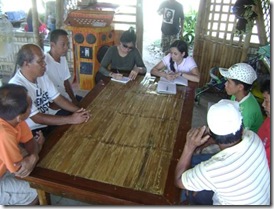
Around 30 fisherfolk of Brgy. San Antonio, Nueva Valencia, Guimaras participated in the first in a series of training workshops under the Season-long training course on milkfish cage culture Phase 2 that was conducted by AQD last May 20-21 at Roma Beach Resort in San Antonio.

DSC02601The two-day training focused on proper handling after harvest, value-addition and marketing of milkfish.
The participants were taught deboning techniques and preparing marinades.

The activity was facilitated by AQD’s Training Section with Ms. Rose Mueda (researcher) and Ms. Rosanna Alama (laboratory assistant) from the Institute of Fish Processing Technology of the University of the Philippines Visayas.

AQD’s Igang station head Mr. Albert Gaitan welcomed the participants while AQD’s Training section head Ms. Kaylin Corre explained the course description, objectives, and expected output of the training.

The training course is part of a collaborative project of Petron Foundation Inc. with CITI Foundation and SEAFDEC/AQD on Mariculture livelihood program for Guimaras fisherfolk
                           
In related development, AQD’s Training and Information Division Head Mr. Renato Agbayani met with Petron Foundation Inc. Executive Director Ms. Marilou Erni on May 30 in Makati City to discuss the reallocation of phase 1 budget (around PhP 2.14 million) which will be used for: (1) distribution of phase 1 income to participating fisherfolk association, (2) technical training and efficient transfer of technology to the beneficiaries, (3) evaluation of socioeconomic benefits of the project and assessment of the coastal environmental impacts of the fish cage culture, and (4) social preparation and community organizing.

They also discussed about the proposed budget for phase 2 (around PhP2.19 million) which will be allotted for: (1) construction of one unit of fish cage for San Antonio fisherfolk, (2) operating expenses for one production run for the 4 barangays of Nueva Valencia namely Igang, Magamay, Sto. Domingo, and San Antonio, (3) purchase of four units motorized boats, (4) community consultations, and (5) SEAFDEC/AQD administrative overhead and technical supervision.

New publications from AQD

AQD is launching new titles to its growing list of publications, both for free and for sale. For the second quarter of 2009, the following were produced:

Research and development for sustainable aquaculture in Southeast Asia: strategic plans 2009-2012
Outlines the strategic plans of the SEAFDEC/AQD for the years 2009 to 2012. In it, new mission statement is presented as well as the goals, objectives, and targets of its various research, training, information dissemination, and administrative thrusts

The Malalison Experience: empowering an island community in west central Philippines
A 64-page booklet that describes SEAFDEC’s community fishery resources management project from 1991 to 1998 with a post project assessment in 2009

Field Guide to Philippine Mangroves (flyer) 2q_publications
A guide with a user-friendly presentation of technical botanical description and illustrations of Philippine mangrove species. Contains close-up photographs of distinctive features for visual comparison to facilitate identification of species

Training handbook on rural aquaculture
A 296-page handbook with chapters on concepts & approaches of sustainable rural aquaculture, importance & conservation of coastal ecosystems, aquaculture technologies, socioeconomics of fishing communities, policies concerning fisheries and aquaculture in Southeast Asia, business planning, and approaches and strategies of the technological transfer pathways at SEAFDEC/AQD

Green light for second phase of milkfish cage project for Guimaras

On the heels of the successful first phase of the milkfish cage culture project for Guimaras communities affected by the 2006 oil spill, stakeholders are giving the project an extended run.

The second phase of the Mariculture livelihood program for Guimaras fisherfolk will still focus on the rearing of milkfish in sea cages but will involve fisherfolk who were not accommodated in the first phase. It is a collaboration among SEAFDEC Aquaculture Department (AQD), Petron Foundation Inc, Citi Foundation, local government units (LGUs) in Guimaras, and the organized communities.

The project calls for AQD to provide technical support and transfer science-based technologies in milkfish cage rearing under its banner project on Institutional capacity development for sustainable aquaculture or ICDSA.

On their part, Petron and Citi will provide funding support (US$ 50,000), with the LGUs providing legislative and other logistical support.

Consultation with stakeholders, environmental monitoring
clip_image002Prior to implementation, a consultation was held on April 15, 2009 in the barangays of Igang, Magamay, San Antonio and Sto. Domingo in Nueva Valencia, Guimaras. This was attended by project implementers, barangays officials, representatives from people’s organizations, and Barangay Fisheries and Aquatic Resources Management Councils (BFARMCs). The consultation provided a venue for those involved in the project to look back at their experiences in implementing the first phase and gauge the effectiveness and progress of previously conducted training sessions. Moreover, selection of a suitable site, upcoming activities for the second phase of the project, and other concerns were also discussed.

Knowing full well the importance of a sound environment on the success of the project, a rapid ocular site assessment was also conducted at the four barangays. Stakeholders were oriented on forthcoming monitoring activities to be conducted on their specific cage areas. As part of environmental monitoring activities, some beneficiaries have agreed to assist in collecting water and soil samples. AQD will then assess these and recommend the necessary steps to follow pending the results.

Official launching

The Season-long training course on milkfish cage culture (phase 2) was officially launched on April 23, 2008 in Brgy.DSC03087 San Antonio, Nueva Valencia, Guimaras with a short program and a ribbon-cutting ceremony. Present during the ceremony were staff from AQD, officers from Petron Foundation, representatives from the communities, including graduates from the phase 1 training sessions. During the program, Brgy. San Antonio Chair, Mr. Danilo Tagulalap expressed his gratitude to Petron and SEAFDEC for the project. He was also hopeful that the skills and experiences learned during the first phase of the project can be applied in the second phase.

For his part, Mr. Allan Victorino, project officer of Petron Foundation, noted the abundance and potential of the natural resources in the community. The challenge, he said, is how to sustain and improve the project, and Petron Foundation will be the bridge to the affected communities’ progress.

“Give a man a fish, you have fed him for today. Teach a man to fish, and you have fed him for a lifetime,” was an old adage brought up by Ms. Carmen Pedrosa, project director of Petron Foundation, who praised the communities for turning a crisis that was the oil spill into an opportunity. She also conveyed that for the second phase of the project to be a success, it is important to educate the stakeholders and foster interconnectivity between the communities.

AQD’s training and information division head, Mr. Renato Agbayani, came bearing good news: the PhP267,855 income from the first phase of the project will be turned over to the beneficiaries and divided accordingly to be used as initial funding for their livelihood projects. For the second phase, one cage measuring 10 x 10 x 6 m will be used to stock the milkfish in Brgy. San Antonio. The other barangays will utilize the cages situated at AQD’s Igang Marine Station. The cost of feeds, fingerlings, and training will be shouldered by the project, valued at PhP474,000 (or around US$10,000, US$1 = PhP47.00).

First training session

clip_image002[6]The slated season-long course started with a Post-harvest and marketing module which kicked off May 21-22, 2009. The module was attended by 32 participants (13 males, 19 females) and was held in Bgy. San Antonio. The attendees learned the techniques in how to prevent harvest losses due to spoilage and how to keep their harvest fresh for consumers. In addition to proper handling and icing, lecturers from the University of the Philippines Visayas (UPV) also taught value-addition by deboning and marinating milkfish. Three flavors were tried by trainees: adobo or a vinegar-soy sauce-peppercorn marinate; hamonado or spicy sweetened soy sauce marinate; and lamayo or salted and partially dried milkfish. The trainees were also given advice on how to market their products.

The next training modules will focus on aquaculture production systems; stock sampling, feeding and cage maintenance; fish health management, business planning, financial analysis and cooperative development and management. These are scheduled to be held within the year.

Big shoes to fill

The second phase of the project has big shoes to fill. After the first phase, more than 9 tons of milkfish ­­– each weighing about half a kilo – were harvested after seven months of culture from three cages situated at AQD’s Igang Marine Station. The same success can thus be achieved the second time around with the cooperation of all players involved.

AQD’s ICDSA project was launched in 2006 to hasten the transfer to and adoption by villagers of appropriate technologies that would enhance the productivity of aquatic resources, and at the same time, safeguard the fragile balance of aquatic ecology. The three main activities include the conduct of season-long training courses, technology demonstration, and research.

AQD gains collaborators in China, Malaysia and the Philippines

DSC01645SEAFDEC/AQD and the Freshwater Fisheries Research Center, Chinese Academy of Fishery Sciences (FFRC/CAFS) extended their partnership with the signing of a memorandum of understanding which will take effect for another next two years.

AQD Chief Dr. Joebert Toledo and FFRC/CAFS Principal Researcher Dr. Xu Pao signed the agreement last 14 May 2009 in Xiamen, China during the NACA Governing Council Meeting. The pact calls for both parties to conduct research studies on feed development and disease control, genetic breeding of prawn and tilapia, water environment for aquaculture activities, and socioeconomics. Moreover, details on training activities and visit exchanges of staff from AQD and FFRC/CAFS are also contained in the agreement. AQD's Dr. Edgar Amar, Ms. Didi Baticados and Ms. Gwen Anuevo will be having exploratory talks with staff from FFRC/CAFS in Wuxi, China from 5-13 June .

Earlier on 31 March, Dr. JD Toledo signed a two-year agreement with Bari Aquatech Sdn Bhd, a business company based in Kuala Lumpur, Malaysia. AQD is to provide technical assistance to a proposed collaborative project on Innovation of the farming technology of tropical abalone (Haliotis asinina) for commercial application in Malaysia. Specifically, AQD will assist Bari Aquatech in implementing research studies to improve spawning & larval rearing, feed formulation, and enhance growth; in drafting & preparing reports and manuals; in establishing & operating a pilot abalone farm; and in training Bari staff. Bari, on the other hand, will provide logistics and shoulder AQD’s expenses during the conduct of feasibility studies, as well as pay for the training.

For the Philippines, AQD signed an agreement on 5 March with the owner-cooperator of a freshwater reservoir in Dingle, Iloilo, Philippines for a project on verification / production trials on netcage culture of seabass and hybrid tilapia using SEAFDEC and commercial feeds. Like most agreements with the private sector, AQD will provide full technical backstopping while the cooperator allows access and use of his facility, which is for about 9 months. To date, fixed netcages have been fabricated, a caretaker’s hut constructed, a series of fine mesh nylon screen installed to increase the surface area for natural food organisms, and black hybrid SEAFDEC strain tilapia fingerlings from the AQD hatchery were stocked on 10 March at 15 fish per cu meter or 937 fish per netcage. Feeding with recommended rates of SEADEC formulated diet and a commercial feed is ongoing and being done in three replicates.

AQD welcomes new Deputy Chief, sends off outgoing Deputy with much appreciation

With the term of Dr. Hiroshi Ogata ending in March 2009, AQD welcomes its new Deputy Chief Dr. Teruo Azuma (pictured at left) who will serve a two-year term starting April 2009. Dr. Azuma, 50, hails from Tochigi, Japan and is married with a 21-year old daughter and an 18-year old son. He is an expert in fish physiology, breeding, behavior and ecology. His last post prior to moving to AQD is Leader of the Breeding and Physiology Section of the Freshwater Fisheries Division of Japan’s National Research Institute of Fisheries Science. He has worked on salmon and trout, and his most ­recent and significant researches are published in the science journals Aquaculture, Zoological Science, Behavior Genetics, and Fisheries Science. Dr. Azuma is a graduate of Kagoshima University (BSc) and Kyushu University (Msc and PhD).

AQD held a welcome party for Dr. Azuma on 12 March 2009 which was also a farewell party for outgoing Deputy Chief Dr. Hiroshi Ogata. In giving tribute to the contributions of Dr. Ogata, AQD Chief Dr. Joebert Toledo said that Dr. Ogata is a respected figure who has implemented with much care the new activities for the three Government of Japan Trust-funded programs on development of technologies & human capacity building for sustainable aquaculture, fish disease surveillance, and stock enhancement.

New publications from SEAFDEC/AQD

Aquaculture stakeholders may now download AQD’s newest publications from its website www.seafdec.org.ph. released in the first quarter of 2009 are:

Untitled-1
  • 2008 Highlights, a 40-page report of AQD’s activities and progress in 2008;
  • Milkfish culture in sea cages, a 2-page fyer on site selection, cage culture & design, investment required, AQD work on developing an early warning system for pollution, and mariculture zones established by the Philippine government;
  • Research collaboration @ SEAFDEC/AQD, a 2-page flyer on AQD's collaboration with academic and other research institutions, non-government organizations, private sector and government agencies in SEAFDEC member countries and other parts of the world. Research priorities and a flow chart for proposals are also discussed in this flyer;
  • Grouper, a poster illustrating full-cycle grouper culture, from hatchery to grow-out

Also released are two aquaculture extension manuals (AEMs) for sale. Email bookstore@seafdec.org.ph for copies:

  • AEM 42, Seed production and grow-out of mud crab (Scylla paramamosain) in Vietnam by NC Thach, a 29-page manual with information on the biology and techniques in the larval rearing, nursery and grow-out of the mud crab Scylla paramamosain
  • AEM 43 Philippine freshwater prawns (Macrobrachium spp.) by MRR Eguia et al., a 50-page
    manual on the biology, morphology, natural distribution, habitat, and economic importance of selected freshwater prawns found in the Philippines

AQD, DENR hold UNITAR workshops for LGUs

Image264The Training workshop on development of local capacities in sea and human security in coastal communities in the Philippines was organized by AQD and the Department of Environment and Natural Resources (DENR) with support from the United Nations Institute For Training and Research (UNITAR). The workshop was held in collaboration with the local government units (LGUs) of Culasi, Antique and Masbate City, Masbate.

Masbate City. The two-day workshop was held last April 15-16 and attended by 47 invited and volunteer participants and resource persons.

Culasi, Antique. The workshop was held last April 28-29 and attended by 58 participants and resource persons.

Day 1. In both venues, the first day of the workshop focused on a series of lectures on the sea and human security. The lectures started with the introduction of the key concept and principles of the UNITAR-Hiroshima Initiative. Then, the lectures linked these concepts to local issues and developments in the Philippines and in the local settings in Masbate City and Malalison Island.

Day 2. The second day of the two workshops in Masbate City and in Barangay Malalison in Culasi focused on the Participatory Action Plan Development (PAPD). The activity engaged participants to contribute in the identification of environmental, socioeconomic and sociopolitical problems relevant to seas and human security in Masbate City and in Malalison Island, respectively.

Priority problems include floods, land subsidence, reclamation areas, low income from fishing, and lack of supplemental livelihoods, medicine and electricity. Solutions were evaluated in terms of technical, financial and institutional feasibility.

The PAPD allowed every participant to cast their votes in the prioritization of these problems. Consensus building and cooperation were key attributes that were demonstrated and developed in the PAPD process.

Results of the PAPD will be discussed in the full report to be submitted to UNITAR-Bannai Small Grant Fund and the other participating organizations and agencies.

AQD attends national, global meets

In joining national and international conferences, AQD expands its network of contacts for future collaborations as well as share the results of its research studies. AQD attended the following:

20th NACA Governing Council Meeting. AQD Chief Dr. JD Toledo attended the Network of Aquaculture Centres in Asia-Pacific (NACA) meeting last 13-15 May in Xiamen, China. The meeting was hosted by the Ministry of Agriculture, Government of China. NACA’s work program for 2008 and planned activities were presented during the meeting.

2009 council meeting41st SEAFDEC Council Meeting. Over 70 participants representing the SEAFDEC Council from 11 member-countries, international organizations (FAO Regional Office for Asia and the Pacific- FAO/RAP and the ASEAN Secretariat), SEAFDEC Departments and Secretariat gathered in Fukuoka, Japan for the 41st SEAFDEC Council Meeting. The event, held from 7-10 April 2009, was attended by AQD’s Dr. Joebert Toledo (Chief); Dr. Teruo Azuma (Deputy Chief) and Ms. Belen Acosta (Special Departmental Coordinator). The meeting – hosted by the Ministry of Agriculture, Forestry and Fisheries of Japan – was convened to review the achievements made by SEAFDEC in 2008 and planned activities for 2009; discuss important fisheries related issues and the management of SEAFDEC as a fisheries organization in Asia; and provide the necessary policy directions. As part of the SEAFDEC Secretary General’s report to the Council on the achievements and plans of SEAFDEC Departments and the Secretariat, Dr. Toledo presented an overview of AQD’s R&D in 2008 and the focus of work in 2009.

Aqua VIV Asia 2009. AQD scientist Dr. Mae Catacutan was at the Aqua VIV Asia 2009 held 11-13 March at the Bangkok International Trade and Exhibit Center in Thailand. She was there to obtain information on the latest issues on aquaculture feed & nutrition, practices in the aquafeed industry, and new products like additives, ingredients, growth enhancers. All these costly new additives led Dr. Catacutan to wonder if AQD can avoid their use in its aquafeed formulations. She noted that what is important is knowing their uses.

Regional workshop on climate change and food security: global challenges for improving the competitiveness of fisheries and fisheries based products in Asia. Dr. Maria Rowena Eguia and associate scientist Dr. Nerissa Salayo attended the workshop held last 19-20 March in Laguna, Philippines. The workshop was organized by WorldFish Centre (WFC) and SEARCA. The first day was spent discussing regional fisheries/aquaculture production as affected by climate change, and government fishery agency representatives from Cambodia, Indonesia, Malaysia, Philippines and Vietnam gave country papers. The second day was focused on the finalization of a draft proposal that WFC hopes to submit for funding.

Second RESCOPAR meeting. AQD scientist Ms. Eleonor Tendencia was one of the participants in the meeting. The event was held last February 25–26 in Samarinda, East Kalimantan, Indonesia. The workshop gave Ms. Tendencia an opportunity to present progress and plans of her PhD thesis, which she is taking from the Wageningen University of The Netherlands.

New Picture1st Asia-Pacific Conference on Chemistry Education (APCCE), 24th Philippine Chemistry Congress. AQD scientist Perla Eusebio (standing, third from right) attended two chemistry-related events in Tagbilaran City, Bohol from April 14 to 16. The theme of the conference – Chemistry education: A way to safeguard man, society and environment – underscored the critical role of chemistry in the preservation of man, society and the environment. The conference was a perfect forum for the exchange of ideas between scientists, chemists, teachers and students for the development of chemistry education in the Asia Pacific region and also fostered the collaborative efforts for the promotion of the chemistry profession.

Image2046Fulbright Visiting Scholar Conference. AQD scientist Dr. Celia L. Pitogo attended the conference which was organized by the United States Department of State and the Council for International Exchange of Scholars in Washington D.C. last April 19–21. The conference was organized to provide the scholars with a valuable opportunity to enhance their understanding of the US and its citizens - including attitudes and experiences of US citizens toward issues of national and international importance. She then proceeded to the University of Rhode Island (URI) from April 21-25 to conduct lectures, seminars and meet with the URI faculty. Dr. Pitogo is on a five-month study leave as a Fulbright Senior Scholar to conduct research on Ensuring sustainability of the Philippine shrimp industry through efective health management of native and introduced shrimp, and is currently based at the University of Arizona in Tucson, Arizona, USA.

AQD accepts trainees from seven countries

DSC01795From January to May, AQD welcomes trainees from Saudi Arabia, Maldives, Malaysia, Kenya, Singapore, Myanmar and the Philippines.

Freshwater aquaculture. Modules on freshwater prawn (19-23 January), tilapia (23-27 February), farm-based feeds (26-27 January), and culture of natural food organisms (26 to 30 January and 23-27 March) were conducted for six from the private sector in the Philippines.

Fish health management. This was arranged for Mr. Abdulmohsen Ibrahim Alasous of the King Abdulaziz City for Science & Technology in Saudi Arabia who trained from 9 to 25 March.

Cage and pond culture of selected marine species. Four attended: Mr. Hussain Ahmed of Maldives, Mr. Ronnie Guiral of General Santos City, Ms. Qisma Omar of Zamboanga City, Mr. Mark Lawrence Pleyto of Makati City and Ms. Rubelie Rayos of Pangasinan. They trained from 10 to 24 March. Ms. Rayos, class chair, was almost in tears as she related how she found AQD as the right institution to get the right training. She now feels confident to run the 50-ha farm she inherited, thanks to her trainers who unselfishly shared their know-how.

Training course on crab hatchery and grow-out. The training started last April 14 at AQD’s Tigbauan Main Station. Nine participants – Mr. David Mirera from Kenya; Mr. Yap Yih Kang from Malaysia, Messrs. Francisco Quinto, Edgardo Samane, Emiliano Aralar, Cupid Elejan and Nemesio Calimutan from the Philippines; and Messrs. Chia Chee Kong and Kua Cherng Yuh from Singapore – and 2 observers (Ms. Eda Leslie Samane from the Philippines and Ms. Naw Deborah from Myanmar took part in the training. The training aims to provide the participants with technical skills and knowledge in crab seed production and grow-out (with emphasis on Scylla serrata) so that the participants can establish/operate a crab hatchery and learn nursery and grow-out techniques. The training ended May 5.